
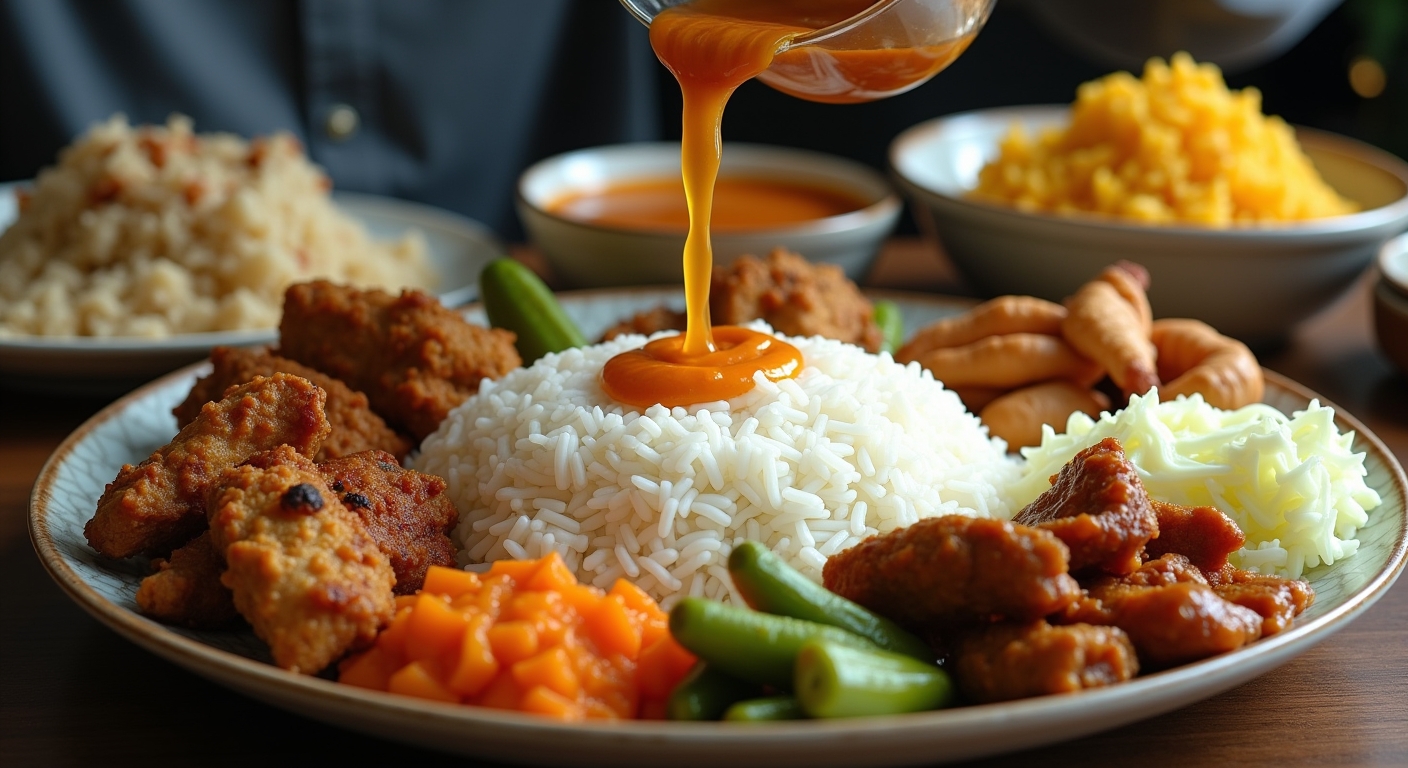
If you are new to nasi kandar, the long line of trays can feel confusing at first. Understanding common nasi kandar side dishes makes it much easier to order with confidence. This beginner-friendly guide explains the side dishes you will usually see, what they taste like, and how to combine them into a balanced first plate.
Why Side Dishes Matter in Nasi Kandar
Nasi kandar starts with rice, but the side dishes are what shape the full experience. At most shops, you choose from proteins, vegetables, eggs, and seafood, then finish with curry gravy poured over the rice.
For beginners, the key is not choosing everything. It is choosing a few side dishes that give a mix of texture, spice, and richness. If you want a broader look at mamak favourites, see this guide to the best mamak food in Malaysia.
The Most Common Protein Side Dishes
Protein dishes are usually the main highlight of a nasi kandar plate. These are the options beginners notice most often.
- Ayam goreng: Fried chicken, usually marinated with spices. Crispy outside, juicy inside, and one of the safest first choices.
- Ayam bawang: Chicken cooked with onion-rich gravy. Softer and more saucy than fried chicken.
- Daging masak hitam: Dark, sweet-savoury beef with deep spice flavour. Rich and slightly heavier.
- Sotong curry: Squid in curry gravy. A favourite for seafood lovers, with a chewy but tender bite.
- Ikan goreng: Fried fish, often served whole or in cut pieces. Good if you want something less heavy than beef.
If this is your first time, ayam goreng is usually the easiest place to start. It goes well with almost any gravy and side vegetable.
Vegetable Side Dishes Beginners Should Know
Vegetables help balance the rich curries and fried items. They also make the plate feel less oily and more complete.
- Bendi: Okra, often lightly cooked with curry. Soft with a slightly crisp centre.
- Kobis: Cabbage, usually stir-fried or curried. Mild and easy to pair with any protein.
- Terung: Eggplant, soft and absorbent, excellent with curry gravy.
- Sayur campur: Mixed vegetables, a practical option if you want variety.
- Timun: Cucumber, sometimes added as a fresh cooling side.
For most beginners, bendi or kobis are simple and familiar choices. They complement stronger dishes without taking over the plate.
Eggs, Seafood, and Extra Add-Ons
Beyond chicken and vegetables, many nasi kandar stalls offer smaller add-ons that change the meal.
- Telur rebus: Hard-boiled egg, often coated in curry gravy. Affordable and filling.
- Telur ikan: Fish roe, prized for its richer texture and stronger seafood taste.
- Udang: Prawns cooked in spicy gravy. Popular but usually more expensive.
- Perut or limpa: Beef tripe or spleen, common at some traditional stalls but more suited to adventurous eaters.
If you are ordering on a budget, egg is a smart add-on. If you want to explore Malaysian food culture further, you may also enjoy this Malaysian street food guide.
How to Build a Good First Nasi Kandar Plate
A beginner plate does not need too many items. In fact, choosing fewer side dishes helps you taste each one clearly.
A simple combination could be:
- Ayam goreng
- Bendi or kobis
- Telur rebus
- Mixed curry gravy
This combination gives you crunch, softness, richness, and a familiar flavour profile. If you prefer seafood, swap the chicken for sotong or fish.
Try to avoid stacking too many heavy dishes like beef, squid, and prawns all at once. The plate can become too rich, too salty, and more expensive than expected.
What the Flavours Are Usually Like
Most nasi kandar side dishes are savoury, spiced, and designed to work with curry gravy. Some dishes are fiery, but many are more aromatic than painfully hot.
Fried chicken brings salt and crunch. Curried vegetables absorb gravy and soften the meal. Beef dishes are often deeper and slightly sweet. Seafood adds briny richness. Eggs mellow everything out.
For beginners, the best approach is balance. Choose one main protein, one vegetable, and one extra. That way, you get the classic nasi kandar experience without overwhelming your palate.
Frequently Asked Questions
What is the best nasi kandar side dish for beginners?
Ayam goreng is usually the best first choice because it is familiar, crispy, and pairs well with any curry gravy.
Which vegetable side dish is easiest to try first?
Kobis and bendi are both beginner-friendly. Kobis is mild, while bendi has a softer texture and absorbs curry well.
How many side dishes should a beginner order?
Two to three side dishes are enough for a first plate. One protein, one vegetable, and one simple extra like egg is a good starting point.
Nasi kandar is easier to enjoy when you know what you are looking at. Start with a few classic side dishes, keep the plate balanced, and you will quickly understand why this Malaysian favourite has such loyal fans.