When comparing mee goreng mamak vs mee goreng basah, the main difference comes down to texture, sauce, and wok style. Both are popular fried noodle dishes in Malaysia, but they deliver very different eating experiences. One is drier, smokier, and bolder, while the other is wetter, saucier, and softer. If you are wondering which one fits your taste, this simple guide breaks down exactly what sets them apart.
What Is Mee Goreng Mamak?
Mee goreng mamak is a spicy stir-fried noodle dish strongly linked to Malaysian mamak stalls. It is usually cooked over high heat with yellow noodles, garlic, chilli, soy sauce, tofu, potato, egg, vegetables, and sometimes squid or chicken.
The key character of mee goreng mamak is its bold, slightly charred flavor. It is not meant to be soupy or heavily coated in gravy. Instead, the noodles are fried until they absorb the sauce and develop a rich, punchy taste.
If you enjoy classic mamak flavors, you may also like this guide to the best mamak food in Malaysia.
What Is Mee Goreng Basah?
Mee goreng basah literally means wet fried noodles. It uses similar noodles and base ingredients, but the final dish has much more moisture. The sauce is thicker and more generous, often clinging to the noodles like a light gravy.
This version is softer in texture and feels richer because of the extra sauce. Some stalls make it with more tomato-based sweetness, while others lean into a savoury eggy gravy. The noodles are still stir-fried, but they are not reduced down to a dry finish.
The Main Difference in Texture and Sauce
The easiest way to understand mee goreng mamak vs mee goreng basah is to look at the noodle finish.
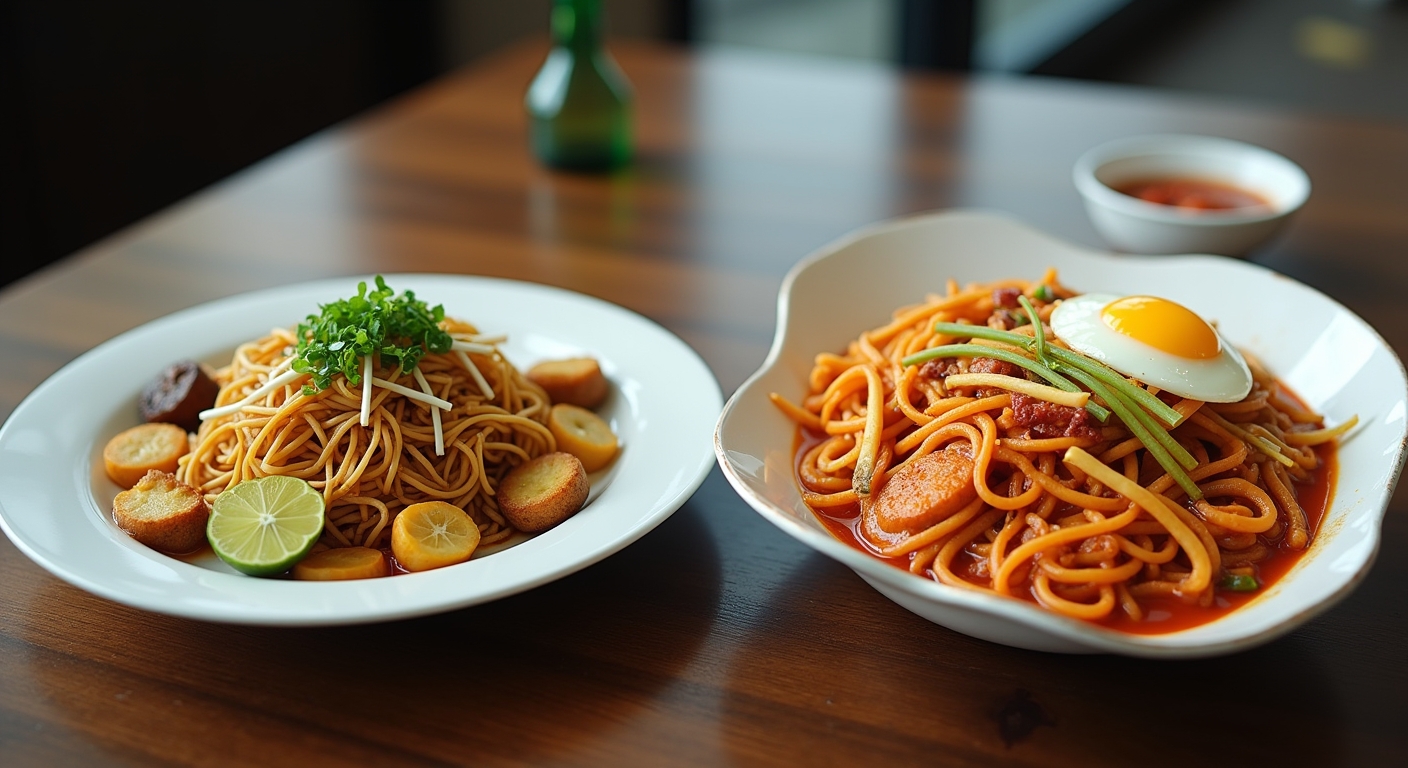
- Mee goreng mamak: drier, more caramelised, lightly coated, with more wok aroma
- Mee goreng basah: wetter, saucier, softer, with a glossy gravy-like coating
Mee goreng mamak usually has more bite because the noodles are fried harder. Mee goreng basah feels heavier and smoother since the sauce stays prominent in every mouthful.
If you like dishes with stronger wok hei and sharper seasoning, mee goreng mamak is usually the better choice. If you prefer comfort food with more sauce, mee goreng basah will likely suit you more.
How the Flavour Profile Changes
Texture affects flavor. Mee goreng mamak often tastes spicier, smokier, and more concentrated. The sauce is reduced during stir-frying, so sweet, savoury, and spicy notes become stronger.
Mee goreng basah tastes rounder and milder because the extra moisture softens the intensity. You may notice more sweetness, more egg richness, and less char from the wok.
That is why two dishes made with similar ingredients can taste surprisingly different. It is not only about what goes into the wok, but also how long it cooks and how much sauce remains at the end.
Common Ingredients and Stall Variations
Both versions usually include yellow noodles, chilli, soy-based sauces, egg, greens, tofu, and sometimes potato. At some stalls, lime, cut chillies, or fritters are served on the side.
Still, there is no single national standard. One mamak stall may serve mee goreng mamak with a slightly moist finish, while another may make mee goreng basah almost like a thick noodle gravy. Regional habits and stall style matter.
For a wider look at how these dishes fit into local food culture, see this Malaysian street food guide.
Which One Should You Order?
Order mee goreng mamak if you want a stronger fried noodle taste, a bit of heat, and a drier plate that feels more wok-driven. It is a good pick if you enjoy sharper seasoning and slightly chewy noodles.
Order mee goreng basah if you want something saucier, softer, and more comforting. It is ideal when you prefer noodles that feel richer and easier to eat without the dry, smoky finish.
In short, neither is better across the board. The right choice depends on whether you want fried intensity or wet noodle comfort.
Frequently Asked Questions
Is mee goreng mamak always spicy?
Not always. It usually has some chilli heat, but the spice level depends on the stall and can often be adjusted.
Does mee goreng basah mean the dish is soupy?
No. It is wetter than regular fried noodles, but it is usually coated in a thick sauce rather than served as a soup.
Can the same stall sell both versions?
Yes. Many Malaysian stalls offer both, with the main difference being how much sauce is used and how dry the noodles are cooked.
Mee goreng mamak and mee goreng basah may start with similar ingredients, but the final result is clearly different. Once you know the gap in texture, sauce, and flavor, ordering the one you actually want becomes much easier.