
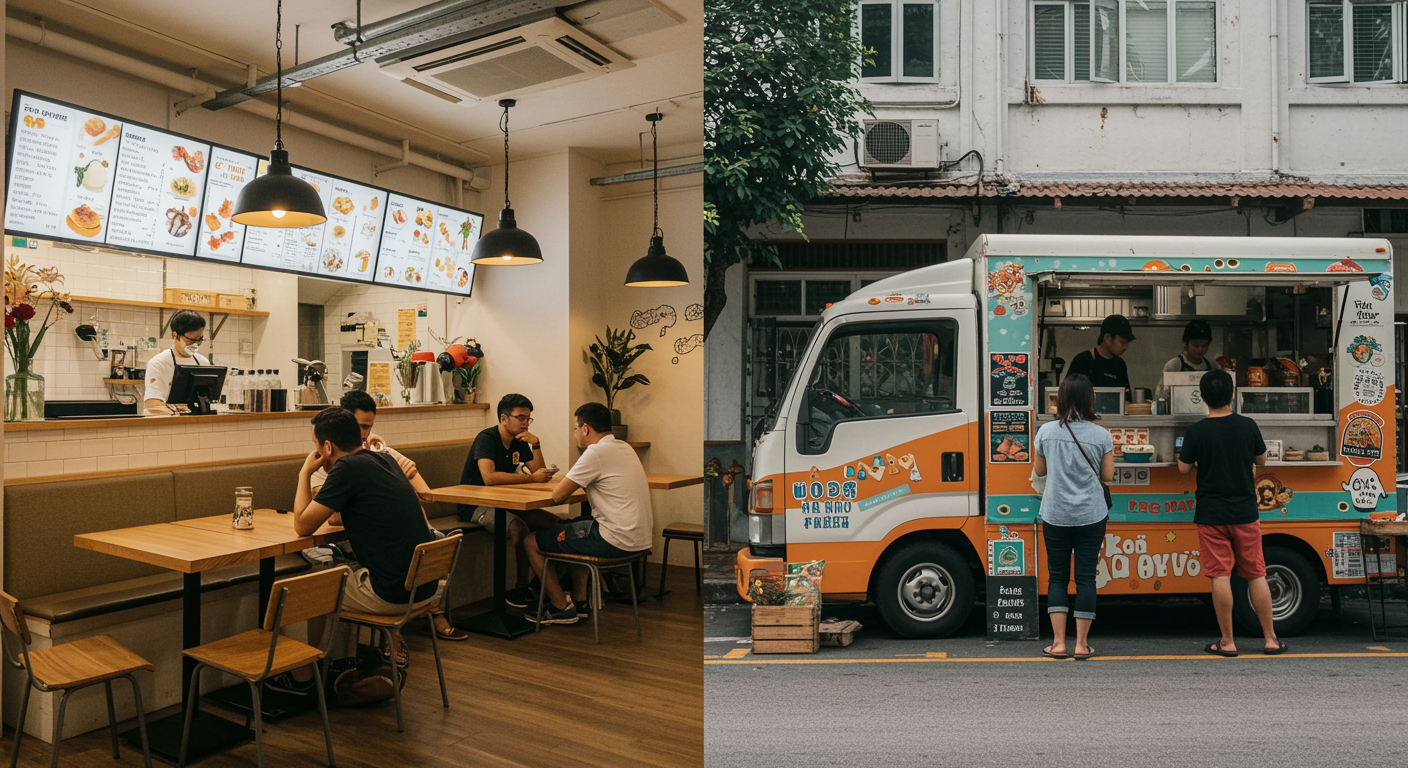
Starting a food venture is an exciting step for many aspiring entrepreneurs in Malaysia. Among the most popular options are opening a traditional café or launching a mobile food truck. Both models can be profitable, but they differ significantly in investment requirements, operational challenges, customer reach, and long-term growth potential.
If you are deciding between a cafe vs food truck business, this comprehensive guide will help you compare startup costs, operating expenses, profit potential, risks, and suitability for beginners. Understanding these factors will help you choose the business model that best matches your budget, lifestyle, and goals.
Understanding the Two Business Models
Before comparing numbers, it is important to understand what each business entails.
Café Business
A café operates from a fixed physical location and typically offers coffee, beverages, desserts, and light meals. Cafés focus heavily on ambience, seating, and customer experience. Success often depends on location and branding.
Food Truck Business
A food truck is a mobile kitchen that sells food at various locations such as office areas, night markets, festivals, or tourist spots. The key advantage is flexibility — operators can move to where demand is highest.
Startup Cost Comparison
Café Startup Costs
Opening a café requires substantial upfront investment. Typical costs include:
- Rental deposit and renovation
- Interior design and furniture
- Commercial kitchen equipment
- Espresso machines and grinders
- Licensing and permits
- Utilities setup
- Initial stock and supplies
- Hiring and training staff
In prime urban areas, startup costs can be very high. Even a small café requires significant capital before opening its doors.
Food Truck Startup Costs
Food trucks generally cost less to launch but still involve notable expenses:
- Purchase or conversion of the vehicle
- Cooking equipment installation
- Generator or power system
- Branding and exterior wrapping
- Licensing and permits
- Initial inventory
Although cheaper than cafés, fully equipped food trucks are not “cheap businesses” — especially if custom-built.
Operating Costs
Café Operating Expenses
Cafés have high fixed monthly costs, including:
- Rent
- Utilities
- Staff salaries
- Maintenance
- Cleaning services
- Internet and POS systems
These costs must be paid regardless of daily sales performance.
Food Truck Operating Expenses
Food trucks have lower fixed costs but higher variable costs:
- Fuel
- Vehicle maintenance
- Parking or site fees
- Event participation fees
- Staff wages (if applicable)
Revenue can fluctuate depending on weather, location, and events.
Profit Potential
Café Profit Potential
Cafés can generate stable income when located in high-traffic areas. Advantages include:
- Repeat customers
- Opportunity for upselling (cakes, pastries, add-ons)
- Delivery services
- Brand loyalty
However, profitability depends heavily on managing overhead costs.
Food Truck Profit Potential
Food trucks can achieve strong margins due to lower fixed expenses. Opportunities include:
- Targeting peak-traffic locations
- Catering for private events
- Participating in festivals
- Expanding to multiple trucks
Income can vary greatly from day to day, but successful trucks can outperform small cafés in profitability.
Flexibility and Mobility
Café
A café is tied to one location. While this builds brand presence, it also creates risk if foot traffic declines. Relocating is expensive and complicated.
Food Truck
Mobility allows operators to adapt quickly. Trucks can move to:
- Busy business districts
- Night markets
- Tourist attractions
- Events and festivals
This flexibility is one of the biggest advantages of the food truck model.
Licensing and Regulations
Café Requirements
Operating a café involves multiple approvals, including:
- Local council business license
- Fire safety compliance
- Food handling certification
- Health inspections
- Optional halal certification
Regulations may vary depending on municipality.
Food Truck Requirements
Food trucks must comply with both food and vehicle regulations:
- Vehicle registration and inspection
- Local council permits for operating areas
- Food safety certification
- Event permits for special locations
Obtaining permission to operate in specific areas can sometimes be challenging.
Staffing Requirements
Café Staffing Needs
Cafés usually require several employees:
- Baristas
- Kitchen staff
- Service crew
- Cleaning personnel
Labour costs are a major expense.
Food Truck Staffing Needs
Food trucks often operate with minimal staff. Some owners run the business themselves with one assistant, reducing payroll costs but increasing workload.
Customer Experience
Café Experience
Cafés offer a comfortable environment for socialising, working, or relaxing. Seating, décor, and atmosphere play a major role in attracting customers.
Food Truck Experience
Food trucks provide a casual, quick-service experience. Customers often eat on the go or at nearby public seating areas. The novelty factor can attract crowds, especially at events.
Risks Associated with Each Model
Café Risks
- High initial investment
- Long break-even period
- Dependence on location
- Economic downturn impact
- High competition
Food Truck Risks
- Weather dependency
- Mechanical breakdowns
- Limited storage space
- Variable income
- Restrictions on operating locations
Growth Opportunities
Café Growth Path
Successful cafés can expand by:
- Opening additional branches
- Franchising
- Selling packaged products
- Building a strong brand
Food Truck Growth Path
Food truck businesses can scale through:
- Operating multiple trucks
- Expanding into catering services
- Launching pop-up restaurants
- Transitioning into a permanent outlet
Many well-known restaurants began as food trucks.
Which Option Is Better for Beginners?
The choice depends on personal circumstances.
A Café May Be Better If You:
- Have sufficient startup capital
- Want a stable long-term business
- Value brand presence and ambience
- Prefer predictable operations
A Food Truck May Be Better If You:
- Have limited funds
- Prefer flexibility and mobility
- Want lower financial risk
- Are comfortable with variable income
Final Verdict
When comparing a cafe vs food truck business, neither option is universally better. Cafés offer stability, brand-building potential, and consistent customer experience but require significant investment and carry higher fixed costs. Food trucks provide flexibility, lower startup barriers, and potentially higher margins but involve operational uncertainties.
Carefully evaluating your budget, risk tolerance, lifestyle preferences, and local market conditions will help you choose the right path. With proper planning and execution, both models can succeed in Malaysia’s vibrant food industry.
Frequently Asked Questions (FAQ)
Is a food truck cheaper than opening a café?
Generally, yes. Food trucks require lower startup investment compared to cafés, although costs vary widely.
Which business earns more profit?
Food trucks often have higher profit margins due to lower overhead, but cafés may generate higher total revenue.
Do food trucks require special licenses?
Yes, operators must obtain permits from local authorities and comply with food safety regulations.
Can a food truck eventually become a café?
Yes. Many successful brands start as food trucks before expanding into permanent outlets.
Which option is safer for first-time entrepreneurs?
Food trucks are typically considered less risky due to lower initial investment and operational flexibility.